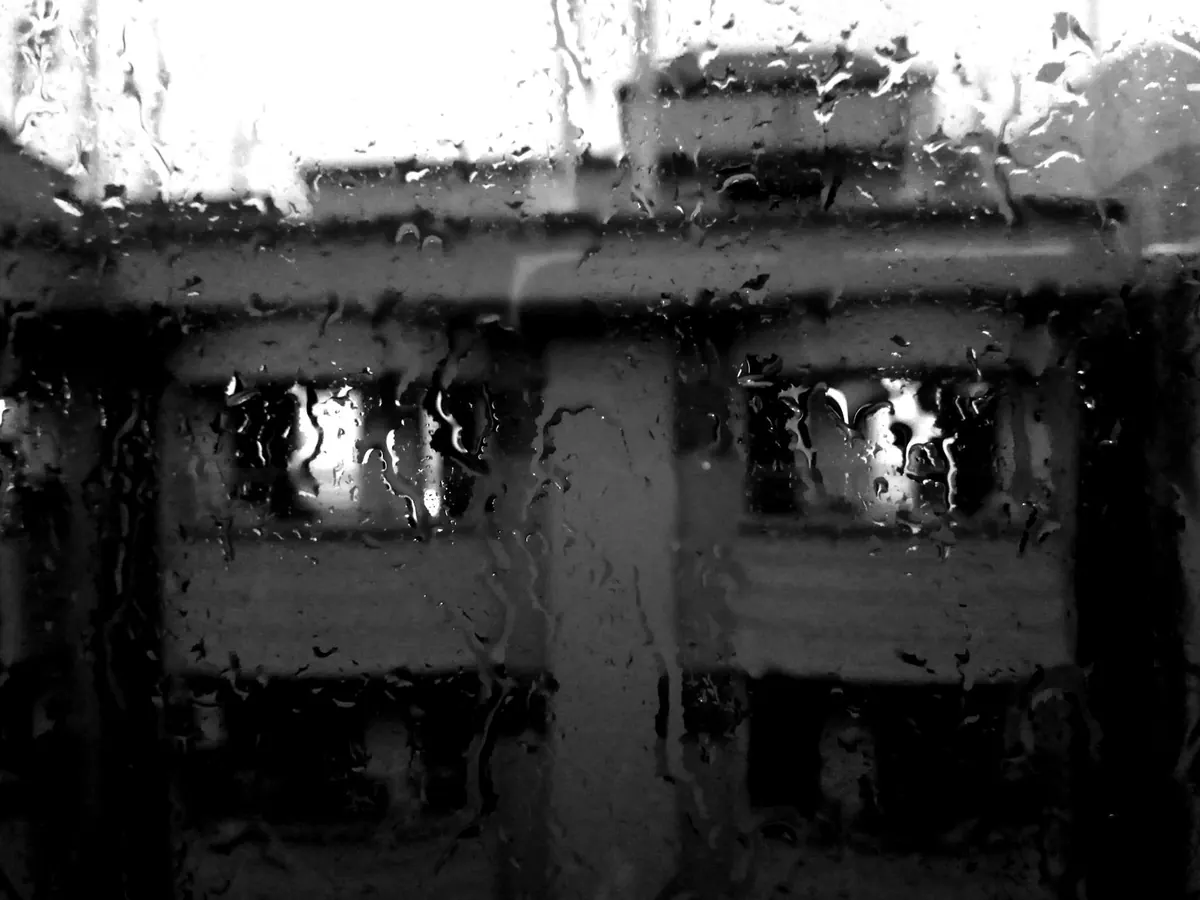
There is a particular kind of British rain that never announces itself. It arrives as a general greyness, sits on the windows, and turns a November afternoon into something closer to dusk by half past three. The heating clicks on. The kettle goes on more often than it strictly needs to. What you want underneath all that is not silence — silence in a damp flat starts to feel like waiting — but sound that fills the room without asking anything of you.
Ambient music was more or less invented for this. Brian Eno's working definition was music that could be as ignorable as it was interesting, and on a wet Tuesday that is exactly the right brief. The ten records below are chosen for grey light, low cloud and long afternoons. They are not productivity tools, and none of them will make you better at spreadsheets. Play them at a volume where you can still hear the rain.
A word on what ambient means here, because the term has been stretched thin over the years. It does not mean empty, and it certainly does not mean wallpaper. The best of these records are meticulously made, often quietly strange, and full of small details that only surface on the third or fourth listen — a chair creaking, a tape hiss that seems to breathe, a chord that lands a fraction later than your ear expects. They simply decline to demand your attention in return for it.
Ambient music must be able to accommodate many levels of listening attention without enforcing one in particular; it must be as ignorable as it is interesting. — Brian Eno
Start at the beginning: Eno
Ambient 1: Music for Airports (1978) is the obvious place to begin, and it has lasted because it does so little. Four pieces, built from tape loops of different lengths that drift slowly out of step with each other, so the music never quite repeats. A slow piano figure, wordless voices, a soft hum underneath. Eno wrote it as background music for an airport — a place where people are anxious and waiting — which makes it unusually well suited to a Sunday indoors with the rain coming in sideways. Listen for the moment, about seven minutes into "1/1", when the piano appears to answer a note that was played several seconds earlier. That is the whole idea in miniature.
Discreet Music (1975) came first and is even simpler: one long piece, a handful of melodic fragments fed through a pair of tape delays and left to overlap for half an hour, followed by three variations on Pachelbel's Canon. Put it on when your hands are busy — cooking, tidying, watching water find its way down a windowpane. It rewards half-attention rather than full attention, which is the whole point. It is also, usefully, one of the few ambient records that works at almost any volume.
Piano, patience and the sound of a room
The Pearl (1984), by Harold Budd and Eno, is the gentlest record on this list and possibly the prettiest. Budd plays a treated piano — the notes hang in the air a little longer than they should, as though the pedal were being held down by someone else — while Eno supplies a wash of synth and processing behind him. It was reportedly made in a single burst of activity and then left well alone, which is exactly how it sounds: unhurried, unrevised, and entirely at ease with itself. "Late October" is the track to start with, and its title tells you most of what you need to know.
Ambient 4: On Land (1982) is the darker counterpart. Where Music for Airports floats, On Land sits low to the ground: swamp sounds, distant animal calls, low-frequency rumble, and a sense of landscape rather than weather. It is the record to reach for when the rain has turned to something heavier and the afternoon has given up on light altogether. Play it on speakers rather than headphones if you can; it was mixed to fill a room, and it does.
Apollo: Atmospheres and Soundtracks (1983), made with Daniel Lanois and Roger Eno, is the most melodic of Eno's ambient records. The pedal steel on "Deep Blue Day" is almost a pop tune, and "An Ending (Ascent)" has appeared in enough documentaries that you already know it, even if you are convinced you don't. It is the one to play when the greyness lifts slightly and the afternoon starts to feel wide rather than closed in.
The other side: drones, decay and digital haze
Selected Ambient Works Volume II (1994), by Aphex Twin, is the record that proved ambient could be genuinely unsettling. Twenty-four tracks, mostly without drums, most of them built around a single texture that repeats for six or eight minutes — a hum, a bell, a loop of something that might once have been a voice. Some of it is beautiful. Some of it is the sound of a machine thinking about you. On a rainy day the effect is oddly calming, in the way that a long train journey is calming.
Substrata (1997), by Biosphere, is Norwegian rather than British, but it understands British weather perfectly: cold, spacious, and full of half-heard voices and wind. Geir Jenssen recorded much of the source material in the Arctic, and it shows. Pair it with a walk in the rain if you are feeling brave, or with a window and a mug if you are not.
The Disintegration Loops (2002), by William Basinski, is the one to save for the very worst days, and possibly for the best. Basinski was transferring old tape loops to digital when the magnetic coating began to flake off, and the loops gradually decayed as he recorded them — the music literally falling apart in real time. What could have been a technical accident became one of the most moving records of its decade. It is long, slow and genuinely profound, and it rewards a full afternoon rather than a quick dip.
Two records for the long haul
76:14 (1994), by Global Communication, is named for its running time and was made by two British producers, Mark Pritchard and Tom Middleton. It is ambient in the warmer, more melodic sense — actual chords, actual tunes, deep bass, and a streak of optimism that most of this list avoids. If the other records here are about sitting with the rain, this one is about the rain clearing.
A Winged Victory for the Sullen (2011), the debut by the duo of Dustin O'Halloran and Adam Wiltzie, is the most recent record on the list and the most openly emotional. Piano, strings and enormous reverb, much of it recorded in a church in Berlin. It is often filed as neoclassical rather than ambient, and it does have more in common with a slow movement than a drone, but it occupies the same grey space and suits the same afternoon. "We Played Some Open Chords and Cried for Joy" is the track that gets people.
How to listen to ambient on a wet afternoon
A few practical notes, learned the hard way.
- Volume matters more than format. Ambient played too loudly becomes intrusive; played too quietly it disappears under the rain and the hum of the fridge. Find the point where you only notice it when you stop to notice it.
- Don't shuffle. These are albums, not playlists. Most of them are sequenced, and the sequence is part of the argument. Music for Airports begins with side one for a reason.
- Let it stop being interesting. The point of this music is not to hold your attention. If you find yourself bored, that is usually the moment it is working.
- One album per afternoon. Two of these in a row turn into furniture. One, with the rain behind it, is a whole atmosphere.
- Don't fight the interruptions. Kettles boil, phones buzz, someone knocks at the door. Ambient music was designed to survive all of that, and it will.
The ten, in order of approach
If you would rather have the list than the prose:
- Ambient 1: Music for Airports — Brian Eno (1978)
- Discreet Music — Brian Eno (1975)
- The Pearl — Harold Budd and Brian Eno (1984)
- Ambient 4: On Land — Brian Eno (1982)
- Apollo: Atmospheres and Soundtracks — Brian Eno, Daniel Lanois, Roger Eno (1983)
- Selected Ambient Works Volume II — Aphex Twin (1994)
- 76:14 — Global Communication (1994)
- Substrata — Biosphere (1997)
- The Disintegration Loops — William Basinski (2002)
- A Winged Victory for the Sullen — A Winged Victory for the Sullen (2011)
Two honourable mentions for when the ten have been exhausted: Felt (2011) by Nils Frahm, recorded late at night with the piano hammers dampened so as not to wake the neighbours, and Sleep (2015) by Max Richter, which runs to eight and a half hours and was written to be heard overnight. Both understand the same thing the rest of this list does: that the right music for a rainy British day is music that is happy to be ignored, and quietly grateful when it isn't.
Photo: Hedaetul Islam / Pexels